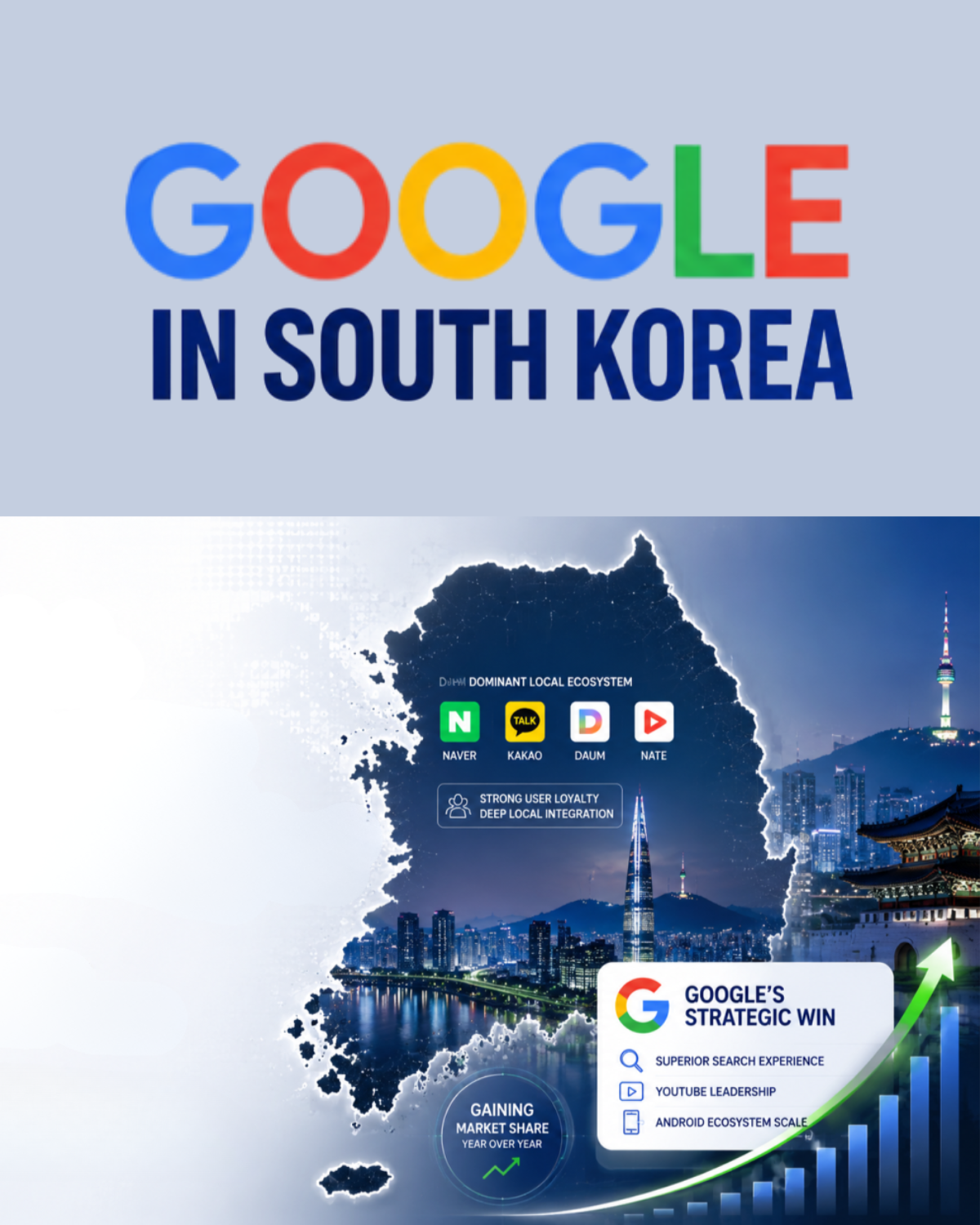
Let’s speak about Google in South Korea.
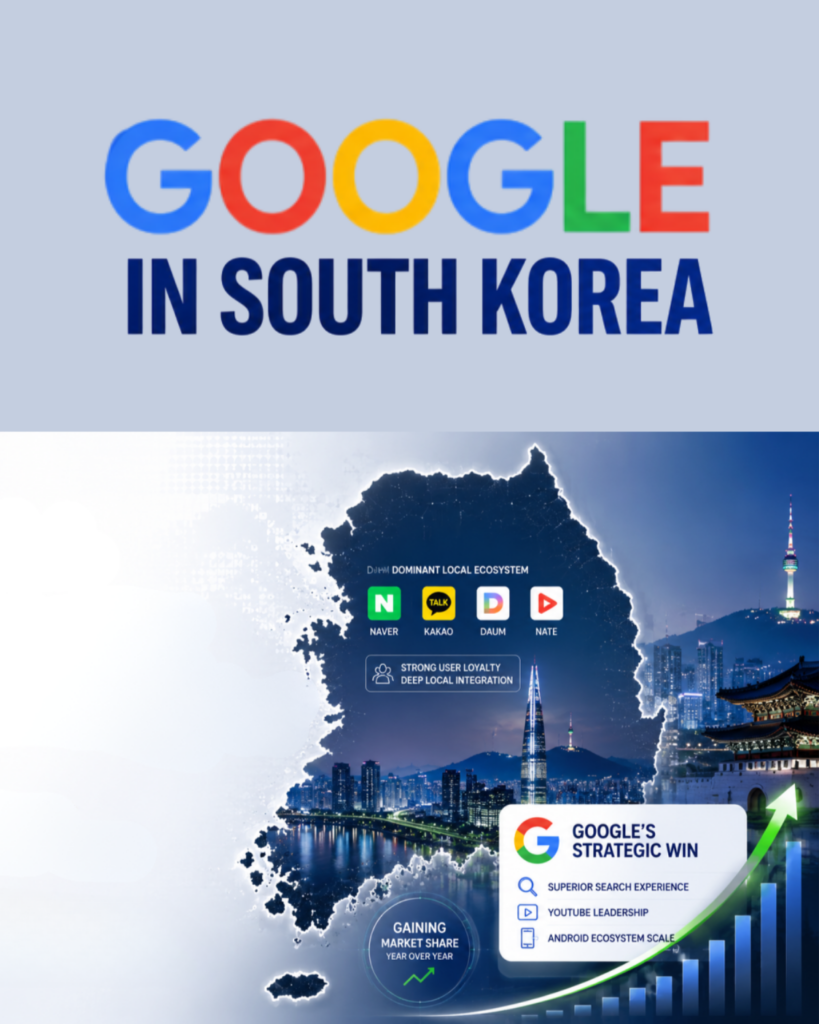
I spent thirty years operating inside the international boardrooms of luxury beauty giants. I know exactly what it looks like when Western executives point at a map of South Korea and assume their global dominance will simply translate.
It never does.
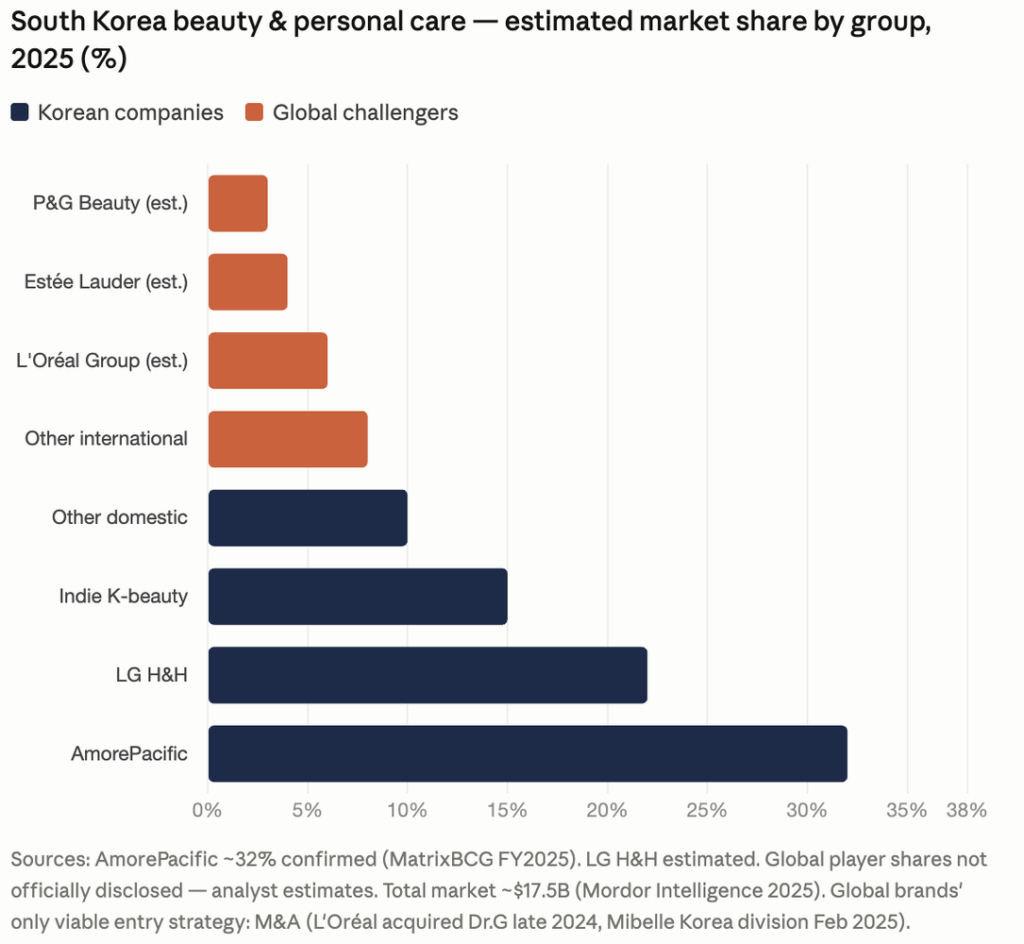
Walmart tried to export its American big-box warehouse model to Seoul in 1998. Eight years later, it fled, selling 16 stores at a massive discount. Carrefour bled out and sold its 32 outlets at a $1.85 billion loss. In the beauty aisle, global juggernauts like L’Oréal and P&G routinely hover around a single-digit market share while domestic giants AmorePacific and LG Household & Health Care control the board.
You do not “enter” South Korea. You bend to it, or you die.
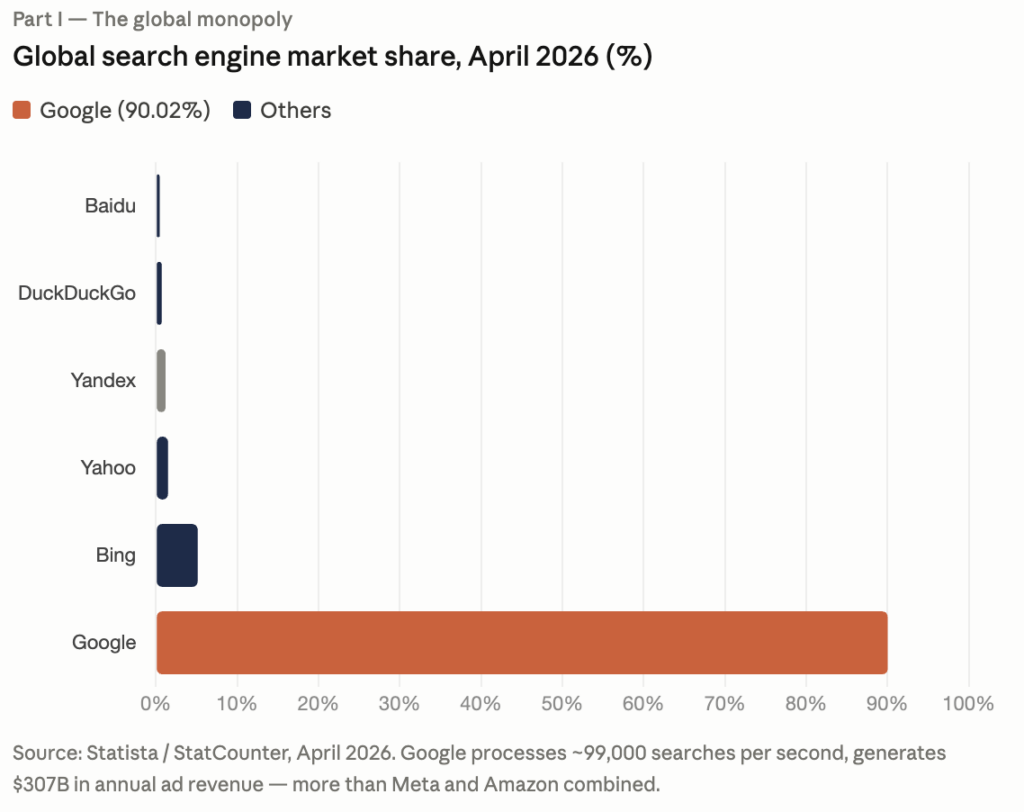
For nearly two decades, Google sat in that same graveyard. While it commanded over 90% of the global search market, it was humiliatingly stuck below 10% in Korea. But unlike the retail giants, Google didn’t pack up and leave. It played a 20-year waiting game.
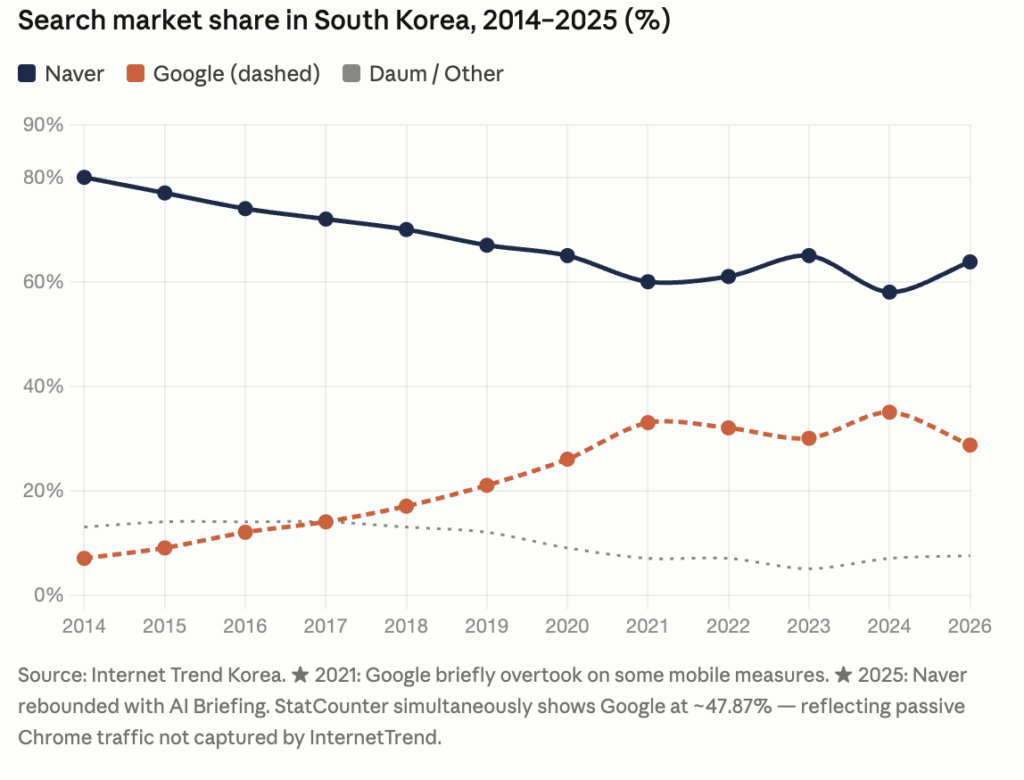
This is the playbook of how a global monopoly finally broke into the fortress of Naver.com
The Fortress Built for “Ppali-Ppali”
To understand Google’s failure in the 2000s, you have to understand the Korean consumer’s baseline requirement: ppali-ppali (hurry-hurry).
In Korea, speed is not a premium feature. It is the absolute floor of acceptable service. In the early days of the internet, the open web lacked enough Korean-language content for Google’s standard crawlers to index. So, the local giant, Naver, didn’t bother building a traditional search engine. It built a walled garden.
Naver created the content itself through community forums (Naver Café) and user-generated Q&A (Knowledge iN). To a Western eye, the Naver homepage looked like a chaotic, visually overwhelming mess. To a Korean user, it was surgical perfection—a fully integrated operating system where you could read the news, find a highly detailed local restaurant blog, and buy a dress with Naver Pay in three seconds flat.
Google smashed against this wall for twenty years. You could not beat Naver at being Korean. So Google stopped trying, and changed the rules of the invasion entirely.
The 5-Step Playbook for Market Infiltration
1. Own the Device, Ignore the Homepage
Google realized it didn’t need to win the desktop portal if it owned the pocket. South Korea is Samsung’s home turf, meaning it is an Android-dominant economy. Today, Google’s operating system captures 66.9% of all mobile devices in the country.
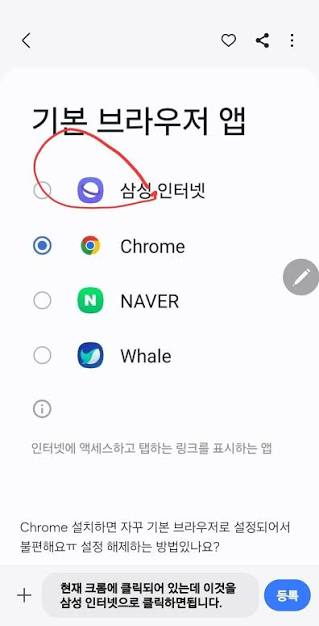
By default, Chrome, Gmail, and Google Maps are pre-installed. The financial reality of this Trojan horse is staggering: in South Korea’s ₩8.2 trillion domestic app economy, Google Play extracts 67.5% of all revenue. The local telecommunication alliance tried to fight back with their own “ONE Store,” offering developers a cheaper 20% commission rate. It holds a pathetic 2.9% market share. Google outflanked the search fortress by owning the infrastructure.
2. The Illusion of Generosity
Where Walmart came to extract margins, Google came to give. Maps, Drive, Photos, Gmail—all best-in-class, all free, and crucially, ad-free at the point of utility. The Korean consumer is deeply suspicious of commercially polluted content. Google engineered utter operational dependence through sheer utility, locking users into an ecosystem they couldn’t afford to leave.
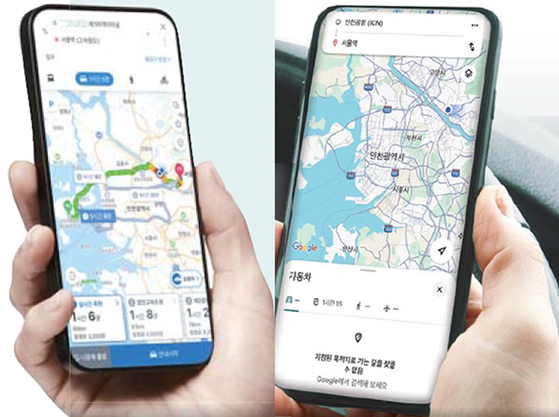
source photo : https://www.joongang.co.kr/article/25329962
3. The Backdoor: YouTube as the Public Square
If Google couldn’t win text search, it would bypass it with video. South Koreans now spend over 114 billion minutes a month on YouTube. That is six times the amount of time they spend on Naver.
For Generation Z, YouTube is the primary search engine for product reviews and travel. For demographics in their sixties, it is the primary source of political news. Google didn’t just build a video platform; it replaced the town square.
4. Funding the “N-Jobber” Economy
This was Google’s most culturally lethal move. South Korea is currently experiencing an explosion of “N-jobbers”—young professionals stacking multiple income streams to survive a high-pressure, financially exhausting economy. Over 404,000 Koreans officially held a second job as of late 2025.
Naver’s traditional model kept advertising revenues locked on its own pages. Google introduced the YouTube Partner Programme and AdSense, paying creators directly. It handed a disillusioned generation the factory and the bank account.
The AI Earthquake: The Final Wall Crumbles
For decades, Korean search was noun-based (“Hongdae restaurant,” “weather Seoul”). Naver’s algorithms rewarded this perfectly. But generative AI has shattered that architecture.
Search has shifted from transactional keywords to complex, sentence-based synthesis. And the numbers show a brutal migration:
- 54.5% of Korean internet users now use ChatGPT for search-type queries.
- Google Gemini has rapidly captured 28.9% usage.
- Among teenagers, Naver’s search share has collapsed to 43.5%, effectively cutting off its generational pipeline.
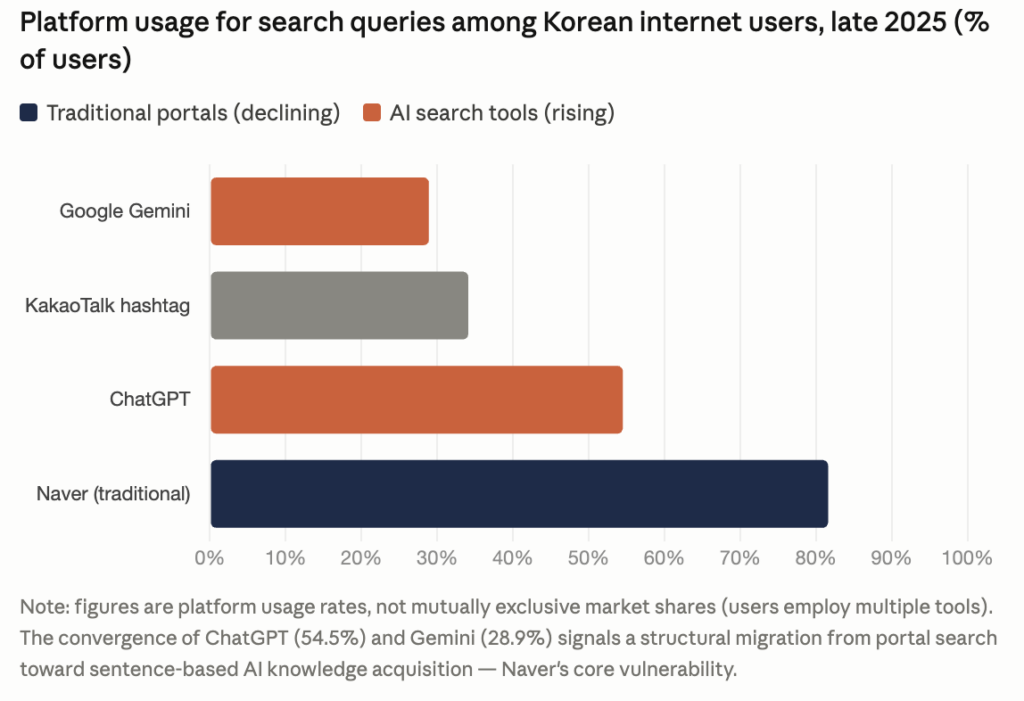
When users fail to get a good answer from one AI, 30% simply jump to another AI model. The exit ramp from Naver no longer leads back to Naver’s homepage.
(Want to read more about how AI is destroying traditional corporate moats? [Internal Link Placeholder: Read my breakdown on the structural collapse of algorithmic marketing here])
The Corporate Reality Check
In February 2026, after nineteen years of being blocked by national security laws, the South Korean government finally granted Google conditional approval to process high-precision mapping data. Concurrently, Google Cloud was embedded into the core of Korean corporate conglomerates like LG CNS.
The war is over. Google no longer needs to win the title of “Number One Search Engine” because it already owns the phone, the creator economy, the video habit, and the enterprise AI layer.
The lesson here transcends Seoul. Cultural intelligence is not about translating an interface or hiring a local PR firm to plaster over a foreign corporate structure. It is about deeply understanding the economic mutations inside a society—like a hyper-educated workforce desperate for financial independence—and giving them the exact tools they need to build it.
The winners give before they take.
I’m a Korean alien living in France—an outsider who sees both sides of the mirror. I write about the collisions between culture, marketing governance, and corporate reality.
Read another facinating story : They used AI to save time. It cost them $165 million, 1.13 million users, and thirty years of brand equity. The complete autopsy of the Starbucks Korea catastrophe.
Leave a Reply